Independent guide · Northland, Kansas City, MO
Independent Guides to Auto Body Repair and Claims
Plain-language guides to hail, deer and winter damage, dents, paint, insurance claims and choosing a body shop, for drivers north of the Missouri River.
This guide is an independent resource on collision repair and body work for drivers in the Northland, the part of the Kansas City metro that lies north of the Missouri River. It explains what repairs involve, what they roughly cost, how insurance claims work under Missouri rules and how to judge a shop before you hand over your keys. It is built from public sources, including state statutes, agency guidance and collision industry training material, and it does not sell repairs of any kind.
Why the guides are local
The weather here is hard on cars, and each season brings its own kind of damage. Spring and early summer bring thunderstorms with hail. Fall brings deer onto roads that run through wooded creek valleys and along river bluffs. Winter means brine on the pavement, black ice on bridges and ramps, and a run of low-speed fender benders. Hail dents, a deer strike and a slide into a curb call for different repairs, fall under different parts of an auto policy and go wrong in different ways.
Start with what just happened
If you are dealing with a recent incident, these guides match the situations people run into most:
- The first hour after a crash covers safety, documentation, police reports, the state's accident report form and calling your insurer.
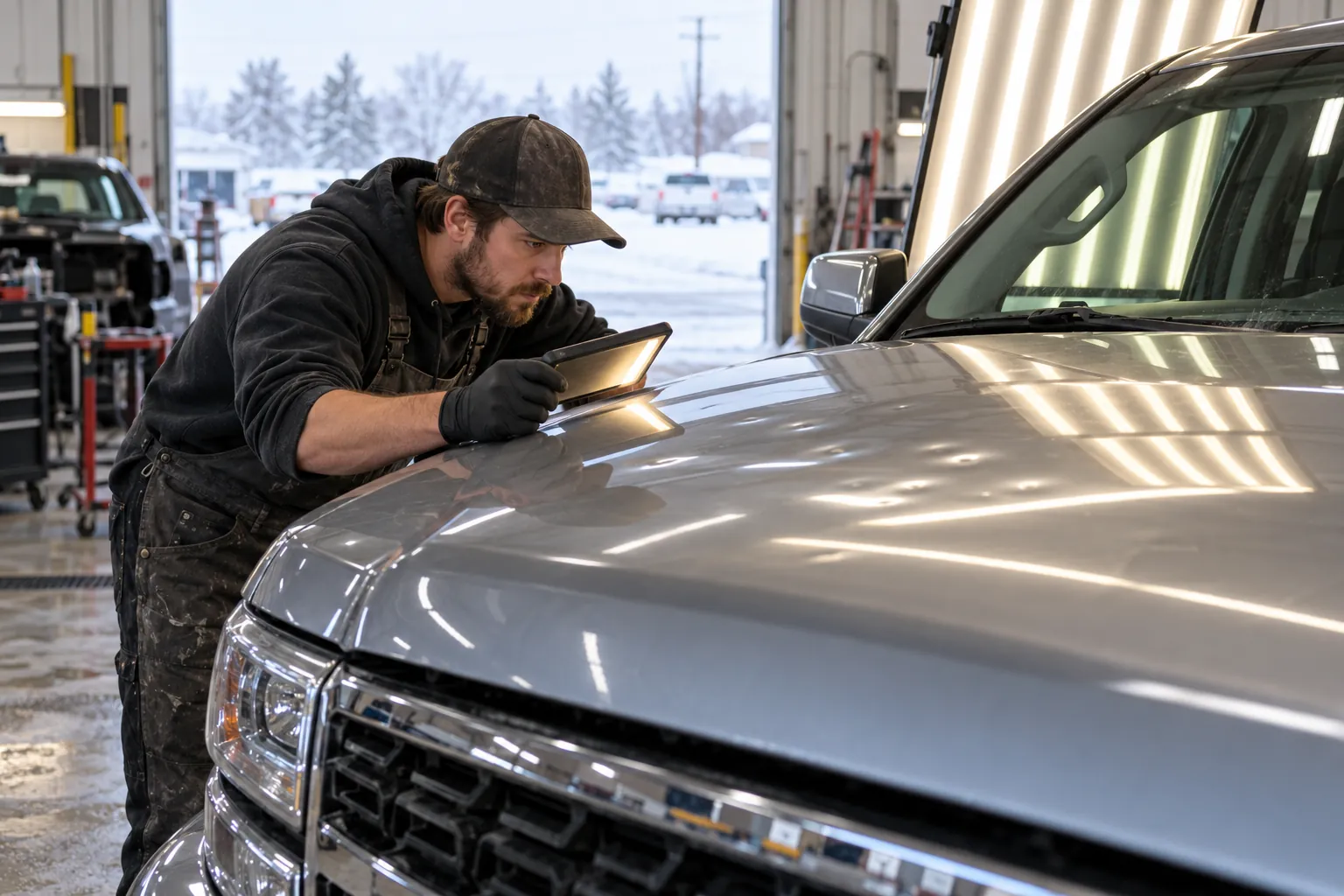
- Hail damage repair explains how dents are counted, when paintless repair works and what to watch for after a big storm.
- Deer collisions looks at the damage that hides behind the grille, comprehensive coverage and how to cut the odds of a strike.
- Winter accidents covers black ice, cold-cracked bumpers and what changes about repairs when the weather turns.
Understand the repair
Repair estimates are full of trade terms. These pages explain what the work actually involves:
- Dent repair options compares paintless repair with traditional body work, with rough cost ranges.
- Paint repair and color matching explains scratch depth, blending and why some repairs show.
- Bumper repair, replacement and sensors covers the parts behind the plastic and why driver-assistance systems may need calibration.
- Frame and unibody damage describes measuring, pulling and sectioning, and how to spot structural problems.
- Rust repair and road salt explains why cover-ups fail and how to slow corrosion.
Deal with the insurer and the shop
Many repair headaches come from the claim process rather than the car. A walkthrough of how a collision claim gets paid covers estimates, supplements, parts and payment, citing the Missouri claim-settlement rule that governs insurers. Total loss, salvage titles and diminished value covers what happens when repair costs approach a car's worth. And choosing a body shop gives you questions to ask, red flags to watch for and a way to compare estimates beyond the bottom-line number.
Hail and deer keep body shops busy here, while drivers in big cities face different hazards. Learners in the five boroughs prepare for them in the 5 hour driving course NYC schools teach before the road test.
Getting back behind the wheel after a crash
A shop can pull a unibody back to factory measurements, recalibrate the sensors behind a bumper and blend paint into the neighboring panels. The repair estimate stops at the car, though. After a deer strike or a slide on an icy bridge, plenty of people start braking at every shadow near the tree line or hand the keys to someone else.
That reaction often eases with gradual practice: short daylight drives on familiar streets, then busier roads once those feel routine. An instructor with a brake pedal on the passenger side can make those first drives calmer, because you are not the only one who can stop the car.
Readers who move to South Florida or spend winters there also face traffic very different from a Northland commute. In south Miami-Dade, PalmWay's Cutler Bay driving lessons start on low-speed streets near the student's home and add Caribbean Boulevard, Old Cutler Road and the Turnpike only when the driver is ready. Each one-on-one lesson lasts 60 minutes in a dual-control car, with pick-up and drop-off seven days a week.
How to use these guides
Each guide opens with a direct answer and then goes into detail, with tables and checklists where they help. Prices appear only as rough ranges to help you recognize a reasonable estimate when you see one; they are not quotes, and they move with the vehicle, the shop and the market. Always verify numbers, warranties and legal details with the shop, your insurer or the official source linked in the guide.
Laws and regulations change, and insurers interpret policies differently. When a guide cites a Missouri statute or rule, it links to the source so you can read the text yourself. If you need advice about injuries, liability or a dispute, consult a licensed professional.
What this site is and is not
This is an informational site. It does not repair vehicles, give quotes, schedule appointments or recommend one business over another. The about page explains how the site is run and how it relates to businesses with similar names. If you spot an error or want to suggest a topic, the contact page tells you how.